Dressed in Sunshine: What Fruit-Inspired Colors Actually Do to Your Brain at the Beach
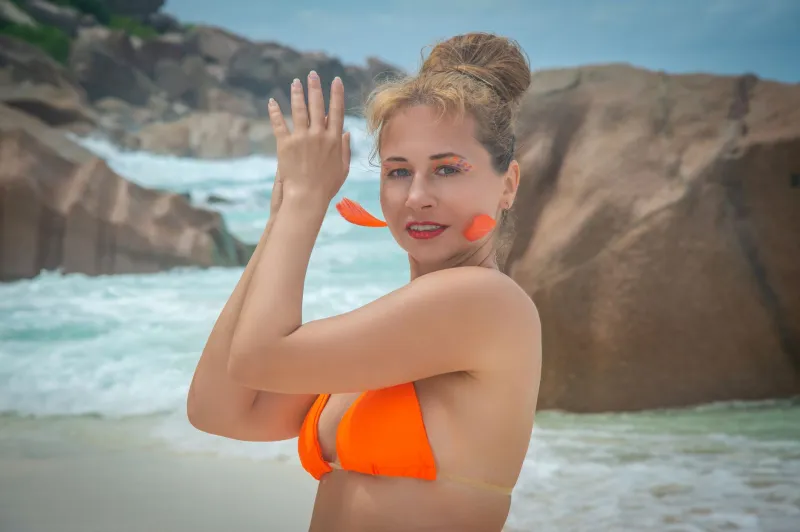
There's a specific kind of confidence that hits when you unzip your beach bag, pull out a mango-orange bikini, and slide it on before stepping onto the sand. It's not just the anticipation of a good beach day. Something deeper is happening — something your brain is orchestrating before you even catch your reflection. And color psychologists say it's completely real.
Fruit-inspired swimwear tones — think juicy watermelon reds, tropical papaya oranges, berry-stained purples, and citrus-bright yellows — have been surging across US beaches and pool decks for the past few seasons. But this isn't just a trend cycle doing its thing. According to researchers who study the psychological impact of color, there are tangible, measurable reasons why wearing these shades makes people feel bolder, more attractive, and more present in their bodies.
Color Isn't Decoration — It's Communication
Color psychology has been a legitimate field of study for decades, but its application to fashion — and specifically swimwear — is where things get genuinely fascinating. Dr. Angela Wright, a UK-based color psychologist whose work has influenced everything from interior design to retail branding, has long argued that colors operate on a universal psychological level, regardless of cultural background. Warm, saturated tones in the red-orange family activate what researchers describe as a "stimulation response" — a mild but measurable uptick in energy, alertness, and confidence.
For beachgoers, that response matters more than it might in, say, an office setting. The beach is a high-exposure environment. You're showing more skin, you're in public, you're surrounded by sensory input. Your nervous system is already a little activated. Pairing that environment with a color that psychologically amplifies energy and confidence creates a compounding effect that many people describe simply as "feeling good in my suit."
At Summer Fruit Bikini, we've heard this from customers constantly — the woman who wore our Mango Splash one-piece to her first beach trip post-pregnancy and said she felt like herself again. The college student who grabbed a raspberry-red bandeau set on impulse and ended up in it all week. These aren't coincidences.
The Warm Tone Resurgence: Why Now?
Fashion historians and trend analysts have noted that bold, warm-toned swimwear tends to resurface during periods of collective optimism or cultural recovery. Post-pandemic summers drove a significant shift away from the muted, "millennial greige" aesthetic that had dominated loungewear and casual fashion. People were ready to be seen again — and they dressed accordingly.
Fashion forecaster and consultant Tonya Mezrich, who has worked with several major US swimwear brands, put it bluntly in a recent interview: "After years of people hiding — literally and emotionally — there was this hunger for color that felt alive. Fruit tones hit that perfectly because they're inherently associated with abundance, pleasure, and summer. They're not aggressive like neon, and they're not timid like pastels. They sit right in that sweet spot of bold-but-joyful."
That joyful quality is significant. Research in environmental psychology suggests that colors associated with natural abundance — ripe fruit, tropical foliage, sun-drenched landscapes — trigger positive memory associations and a mild euphoric response. In other words, wearing a guava-pink bikini might actually make you feel a little happier, because your brain is quietly connecting that color to good things: summer, sweetness, warmth, life.
Body Image and the Bold Color Paradox
Here's where things get a little counterintuitive. Conventional fashion wisdom — especially as it's been applied to swimwear for decades — told people, particularly women, to use dark, "slimming" colors to minimize their bodies. Black. Navy. Deep forest green. The logic was that muted tones would draw less attention and therefore cause less anxiety.
But color psychology researchers have been pushing back on this for years, and body image specialists are starting to agree. Wearing bold, vibrant colors doesn't just attract attention — it shifts the nature of that attention. When someone wears a striking watermelon-print bikini onto the beach, the visual narrative becomes about the color, the print, the personality, rather than a clinical assessment of body shape. The color becomes the story.
More importantly, wearing bold color requires a certain internal permission. You have to decide, even unconsciously, that you're allowed to be seen. That act of permission — choosing vibrancy over camouflage — has been linked in several small-scale studies to improved body satisfaction and reduced self-consciousness in social settings.
Body image coach and influencer Daniela Reyes, based in Miami, has talked openly about this shift in her own experience. "I spent years in black one-pieces because I thought I was 'playing it safe.' The first summer I wore a bright citrus-orange bikini, I realized the safety I was looking for was never in the color. It was in deciding I deserved to take up space. The color just helped me get there."
Fruit Tones as Self-Expression at the Shore
Beyond mood and body image, color in swimwear functions as a form of identity signaling — a way of communicating personality before you've said a word. Different fruit-inspired tones carry distinct psychological associations that resonate with different aspects of personality.
Deep berry purples and plum tones suggest creativity and individuality — they're the picks of someone who makes their own rules. Tropical oranges and papayas read as social, energetic, and fun — the life of the beach day. Lemon and lime yellows project optimism and approachability. Watermelon reds sit at the intersection of boldness and playfulness, a combination that's practically irresistible.
The fact that fruit provides the visual vocabulary for these associations is no accident. Fruit is universally understood as something good — nourishing, pleasurable, colorful, seasonal. When those qualities translate into what you're wearing, they become part of how you present yourself to the world.
Wearing Your Mood, Choosing Your Day
One of the most practical takeaways from color psychology research is that you can actually use color intentionally to influence your emotional state — not just reflect it. On a day when you're feeling a little low-energy or self-conscious, reaching for a bright tangerine bikini instead of a safe black one-piece isn't vanity. It's a legitimate mood intervention.
This is the philosophy baked into everything we do at Summer Fruit Bikini. Swimwear isn't just functional. It's the first decision you make about who you're going to be that day at the beach. When you choose a color that's alive, warm, and unapologetically vibrant, you're setting an intention — for joy, for presence, for confidence.
The beach is one of the few places in American life where we're expected to show up exactly as we are, in our bodies, without the armor of professional clothing or formal dress. That vulnerability is real. But so is the power of showing up in a color that makes your brain say: yes, today, this.
This summer, let the fruit do the talking.